Motorized curtain systems are becoming a central part of modern home automation, especially in rapidly developing cities such as Abu Dhabi. As residential buildings and smart homes become more technologically advanced, automated window solutions are increasingly used to improve comfort, safety, and energy efficiency. Motorized curtains allow homeowners to control natural light, privacy, and indoor temperature using remote controls, wall switches, or smart home applications.
Beyond convenience, motorized curtains represent a shift toward integrated living environments. Instead of manually adjusting heavy curtain panels multiple times per day, automated systems perform adjustments based on pre-programmed schedules or environmental triggers. This creates a seamless daily routine where window coverings automatically respond to sunlight levels, time of day, or indoor temperature requirements.

How smart curtain motor systems integrate with home automation platforms to create synchronized lighting and privacy control schedules
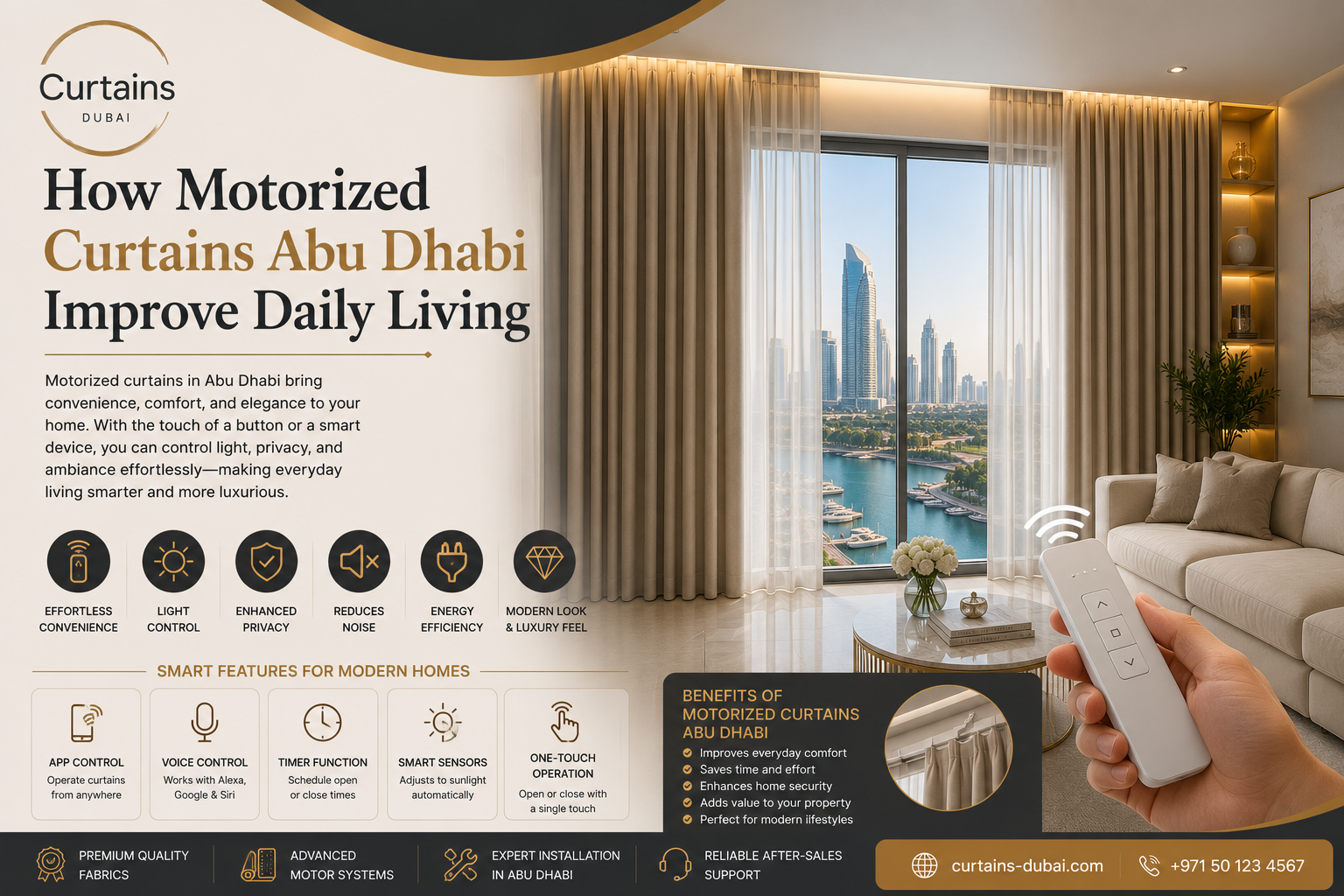
Motorized curtain systems can connect directly to smart home ecosystems, allowing centralized control of multiple household functions.
Integration benefits include:
- Automatic opening at sunrise to simulate natural wake cycles
- Closing during peak sunlight hours to maintain cooler indoor temperatures
- Synchronization with lighting systems to balance natural and artificial light
- Voice control through smart home assistants
- Remote control via smartphone applications
Modern smart curtain systems often allow users to create automation schedules such as:
- Morning open schedule
- Afternoon partial close for heat control
- Evening full privacy closure
When researching different automation curtain technologies, many homeowners explore product specifications and installation insights through resources like motorized curtains abu dhabi to better understand compatibility with smart home systems.
Understanding remote control technologies used in motorized curtains including RF, WiFi, and smart home voice assistant integrations
Motorized curtains typically operate using one or more wireless communication technologies.
Common control technologies include:
RF (Radio Frequency):
- Reliable short-range control
- Works without internet connection
- Dedicated remote controllers
WiFi-Based Control:
- Allows remote operation from anywhere
- Supports smartphone app integration
- Enables automation scheduling
Smart Voice Assistant Integration:
- Voice command operation
- Integration with broader home automation scenes
- Hands-free convenience
Choosing the right control technology depends on home infrastructure, user preference, and integration needs.
Safety benefits of cordless motorized curtain systems for homes with children and pets and how automation reduces manual handling
Cordless motorized curtains eliminate traditional curtain cords, which can pose safety risks in family homes.
Safety advantages include:
- No hanging cords or chains
- Reduced risk of accidental entanglement
- Smooth, controlled movement
- Reduced strain from manual pulling of heavy curtains
Automation also prevents damage caused by uneven manual handling, extending curtain lifespan and maintaining fabric alignment.
Motorized systems are especially useful for:
- Floor-to-ceiling windows
- Heavy blackout curtain installations
- Hard-to-reach window placements
Energy efficiency advantages when motorized curtains automatically respond to sunlight intensity and room temperature conditions
Motorized curtains can significantly support home energy efficiency by responding automatically to environmental conditions.
Energy efficiency features include:
- Closing during peak solar radiation hours
- Opening during cooler morning periods
- Supporting HVAC system workload reduction
- Maintaining stable indoor temperatures
In commercial and residential developments influenced by large retail sourcing hubs such as Dragon Mart, automated curtain systems have become more accessible due to expanded product variety and motor technology improvements.
Many homeowners researching curtain automation trends and fabric compatibility explore available market selections through guides such as curtains dragon mart to better understand motor compatibility with different curtain weights and styles.
Installation considerations including power supply planning, wall structure compatibility, and smart controller placement for reliability
Successful motorized curtain installation requires careful planning.
Key installation factors include:
- Power supply location and wiring access
- Wall strength for mounting heavy curtain tracks
- Motor noise insulation placement
- Smart controller signal coverage
- Curtain weight and motor torque compatibility
Installation planning steps often include:
- Measuring window width and height
- Calculating curtain weight load
- Selecting appropriate motor power rating
- Planning electrical connection or battery system
- Testing signal coverage for remote or smart control
Proper installation ensures reliable daily performance and long motor lifespan.
How modern shopping hubs like Dragon Mart influence curtain technology availability and design trends in regional markets
Large international trade centers have played a role in accelerating curtain automation technology availability across regional markets.
These hubs help drive:
- Faster adoption of smart curtain motors
- Expanded fabric and track system variety
- Increased awareness of automation home solutions
- Competitive technology innovation
Consumers researching regional curtain technology developments often study sourcing options through informational resources such as dragon mart curtain section to understand how product variety impacts smart curtain installation possibilities.

Long term maintenance practices for curtain motors including lubrication schedules and electronic component lifespan optimization
Proper maintenance helps motorized curtain systems operate smoothly for many years.
Recommended maintenance practices:
- Periodic track cleaning to prevent dust buildup
- Motor lubrication checks (if applicable)
- Inspecting wiring and connections
- Testing remote and smart control response
- Updating smart home firmware if integrated
Maintenance frequency depends on usage levels and environmental conditions such as dust exposure or humidity.
Preventive maintenance helps avoid unexpected motor failure and ensures consistent curtain movement performance.
Conclusion
Motorized curtains are transforming how modern homes manage light, privacy, and indoor comfort. By combining automation technology with practical functionality, these systems improve daily convenience while supporting energy efficiency and home safety. As smart home adoption continues to grow, motorized curtains are becoming a natural part of fully automated living environments.
With proper installation planning and regular maintenance, motorized curtain systems can provide reliable performance and long-term convenience benefits for homeowners.
FAQs
How long do motorized curtain systems typically last?
Most motorized curtain motors can last between 5–10 years depending on usage frequency and maintenance quality.
Can motorized curtains work during power outages?
Some models include battery backup systems, while others may require manual override operation.
Are motorized curtains suitable for large windows?
motorized curtains dubai can be a practical option for large windows because they allow curtains to open and close without manual effort. Depending on the selected system, operation may be available through a remote, wall control, or compatible smart-home device. They can also provide convenient control over privacy and natural light in different rooms.
Are motorized curtains compatible with all window sizes?
Yes, motorized curtain systems can be customized for small windows, large panoramic windows, and floor-to-ceiling installations.
How quiet are modern motorized curtain motors during operation?
Most modern motors operate very quietly, producing minimal sound that is barely noticeable in normal home environments.
Can motorized curtains be integrated with smart home ecosystems?
Yes, many motorized curtain systems integrate with smart home platforms, allowing voice control and automation scheduling.
Do motorized curtains require professional installation?
Professional installation is recommended for optimal performance, especially for wired systems and large curtain installations.