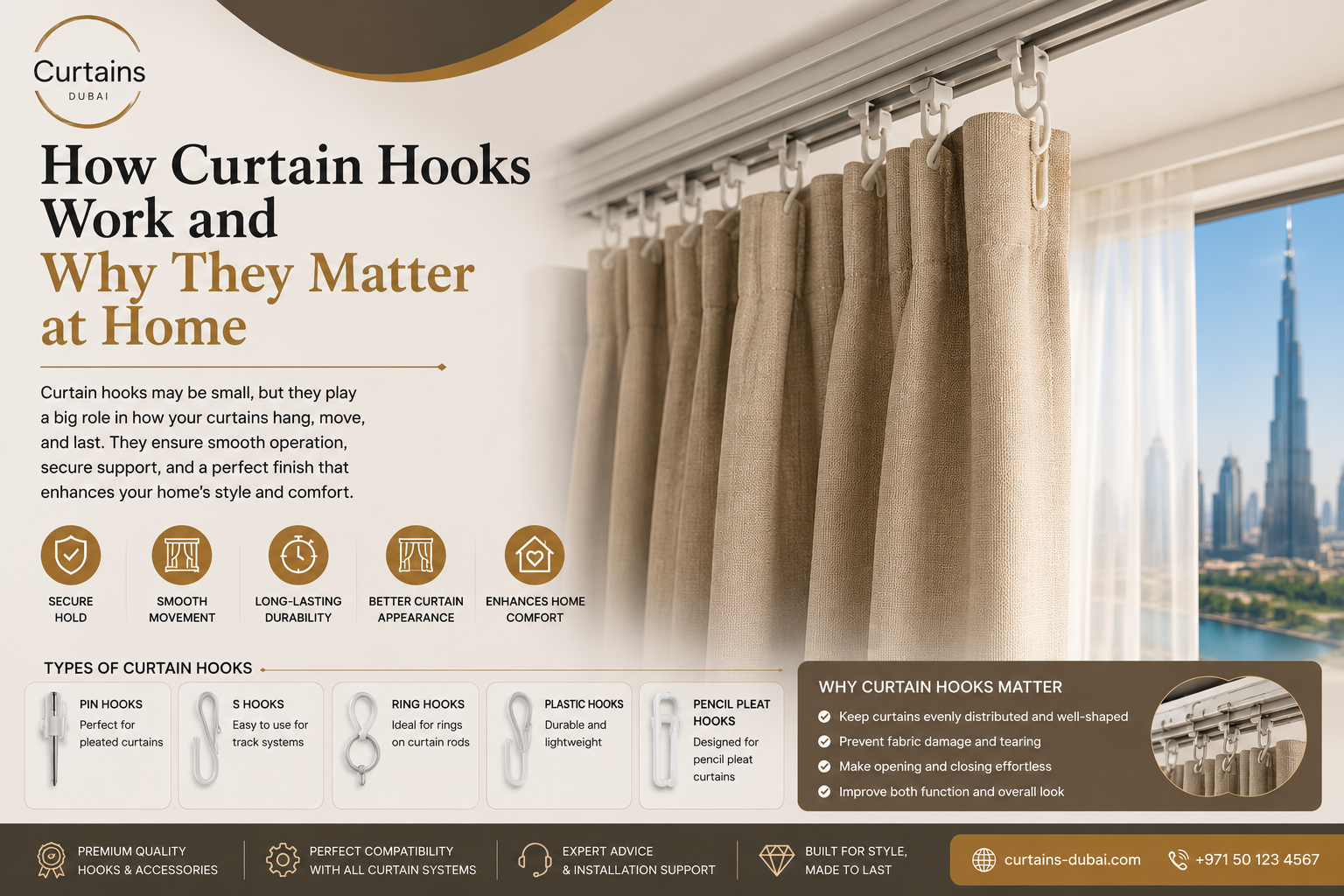
Window treatments may appear simple from the outside, but the small hardware components behind them play a major role in functionality and durability. Among these components, hanging accessories are responsible for how smoothly curtains open and close, how evenly they hang, and how long they maintain their shape. Many people focus only on fabric and design, overlooking the technical elements that support the entire system.
In urban homes, especially in dense cities like Dubai, window systems must perform under frequent daily use, dust exposure, and temperature fluctuations. Understanding how hanging mechanisms work helps homeowners maintain their window treatments and avoid common installation or maintenance problems.
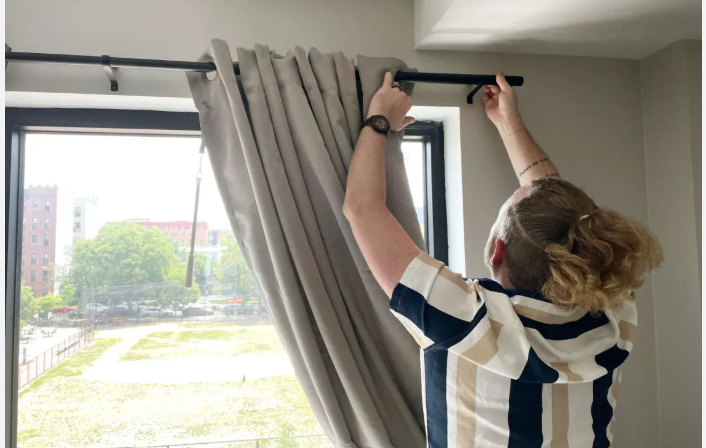
The role of hanging accessories in proper curtain installation
Hanging accessories serve as the connection point between the curtain fabric and the support system such as rods or tracks. Without proper attachment components, even high-quality fabrics can sag, wrinkle, or become difficult to operate.
Their primary roles include:
- Supporting the full weight of curtain panels
- Maintaining even spacing across the curtain width
- Allowing smooth sliding or folding motion
- Preventing fabric stress or tearing
- Ensuring consistent curtain height alignment
Many homeowners researching installation methods eventually learn that choosing the correct curtain hooks is just as important as selecting the curtain fabric itself. The wrong hook type can lead to uneven draping or difficulty opening and closing the curtains.
Proper installation starts with matching hook style to curtain heading type and track or rod system.
How different hook materials affect durability and weight support
Hanging accessories are typically made from plastic, stainless steel, or coated metal alloys. Each material offers different advantages depending on usage environment and curtain weight.
Plastic hooks
- Lightweight and affordable
- Resistant to rust and moisture
- Suitable for lightweight fabrics
- May weaken under heavy load over time
Metal hooks
- Higher load-bearing capacity
- Longer lifespan under frequent use
- Better resistance to bending or snapping
- Slightly heavier and sometimes more visible
Material choice becomes especially important for thick thermal or layered curtains that require stronger support.
Durability is influenced not only by material but also by manufacturing quality and design structure.
Understanding spacing techniques for evenly hanging curtains
Spacing directly affects how curtains look and function. Incorrect spacing can cause bunching, uneven folds, or difficulty sliding along tracks.
General spacing guidelines:
- Standard spacing: 4–6 inches between hooks
- Heavier fabrics: slightly closer spacing for better support
- Lightweight fabrics: slightly wider spacing allowed
- Decorative pleated curtains: require precise spacing alignment
Proper spacing ensures:
- Uniform fold patterns
- Balanced weight distribution
- Smooth sliding performance
- Reduced fabric strain
Spacing should always be measured carefully before final installation.
How hook types influence curtain movement and folding patterns
Different hook designs affect how curtains move and how folds appear when curtains are closed or open.
Common hook behavior differences:
- Fixed hooks create structured pleats
- Sliding hooks allow more fluid movement
- Rotating hooks reduce track friction
- Deep-neck hooks improve fold depth
When homeowners visit a local curtain shop dubai, they often discover that different curtain styles require specific hanging hardware. For example, pinch pleat curtains require structured hooks, while modern track systems may use gliding hook designs.
Choosing compatible hook designs improves both visual appearance and daily usability.
Common installation mistakes and how to avoid fabric damage
Improper installation can damage curtain fabric or shorten hardware lifespan. Many issues result from simple measurement or alignment errors.
Common mistakes include:
- Using too few hanging points for heavy fabrics
- Installing hooks too close to curtain edges
- Mixing incompatible hook and track systems
- Overstretching fabric while attaching hooks
- Ignoring manufacturer spacing guidelines
How to avoid damage:
- Measure curtain width and weight before installation
- Match hook type to curtain heading design
- Test sliding motion before final placement
- Avoid forcing hooks into tight track channels
- Periodically check hook condition after installation
Careful installation prevents early wear and maintains curtain appearance.
The relationship between rods, tracks, and hanging accessories
Curtain systems function as a complete mechanical unit. Hooks, rods, tracks, and carriers must all work together.
Rod systems
- Often use ring-based hook attachments
- Suitable for decorative and traditional curtains
- Easier installation and replacement
Track systems
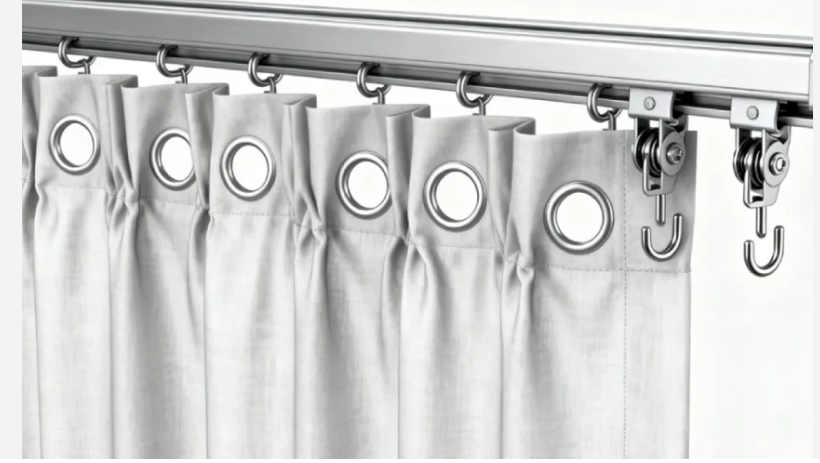
- Use sliding carriers connected to hooks
- Provide smoother movement
- Ideal for wide windows or ceiling installations
In outdoor or natural-style installations, window solutions such as bamboo blinds dubai may use alternative mounting hardware rather than traditional hook systems. Understanding these differences helps homeowners choose appropriate installation methods for different window treatment types.
Compatibility between all system components ensures long-term reliability.
Maintenance tips to extend the life of curtain hanging hardware
Regular maintenance keeps hanging accessories working smoothly and prevents sudden failures.
Maintenance best practices:
- Clean hooks and tracks every few months
- Remove dust buildup that causes friction
- Inspect for bending, cracking, or rust signs
- Replace damaged hooks immediately
- Lubricate track systems if manufacturer allows
Environmental factors like humidity, dust, and frequent use can accelerate wear. Preventive maintenance reduces long-term replacement needs.
Conclusion
Hanging accessories are small but critical components in curtain systems. They determine how well curtains hang, how smoothly they operate, and how long they last. Understanding hook materials, spacing, compatibility, and maintenance helps homeowners avoid common problems and maintain functional window coverings.
By viewing curtain installation as a complete system rather than just fabric selection, homeowners can create more durable and visually consistent window solutions.
FAQs
What types of curtain hanging accessories exist?
Common types include plastic hooks, metal hooks, rotating hooks, sliding track hooks, and pleat-specific hooks.
How do you choose the right size for hanging accessories?
Size depends on curtain weight, heading style, and compatibility with rods or track carriers.
Can incorrect installation damage curtain fabrics?
Yes. Improper spacing or incompatible hardware can cause fabric tearing or uneven weight stress.
Are metal or plastic hanging accessories more durable?
Metal typically lasts longer and supports heavier fabrics, while plastic works well for lightweight curtains.
How often should curtain hanging accessories be replaced?
Replacement depends on usage frequency and material quality, but inspection every 6–12 months is recommended.
Do heavier curtains require special hanging solutions?
Yes. Heavier fabrics require stronger materials, closer spacing, and sometimes reinforced track carriers.