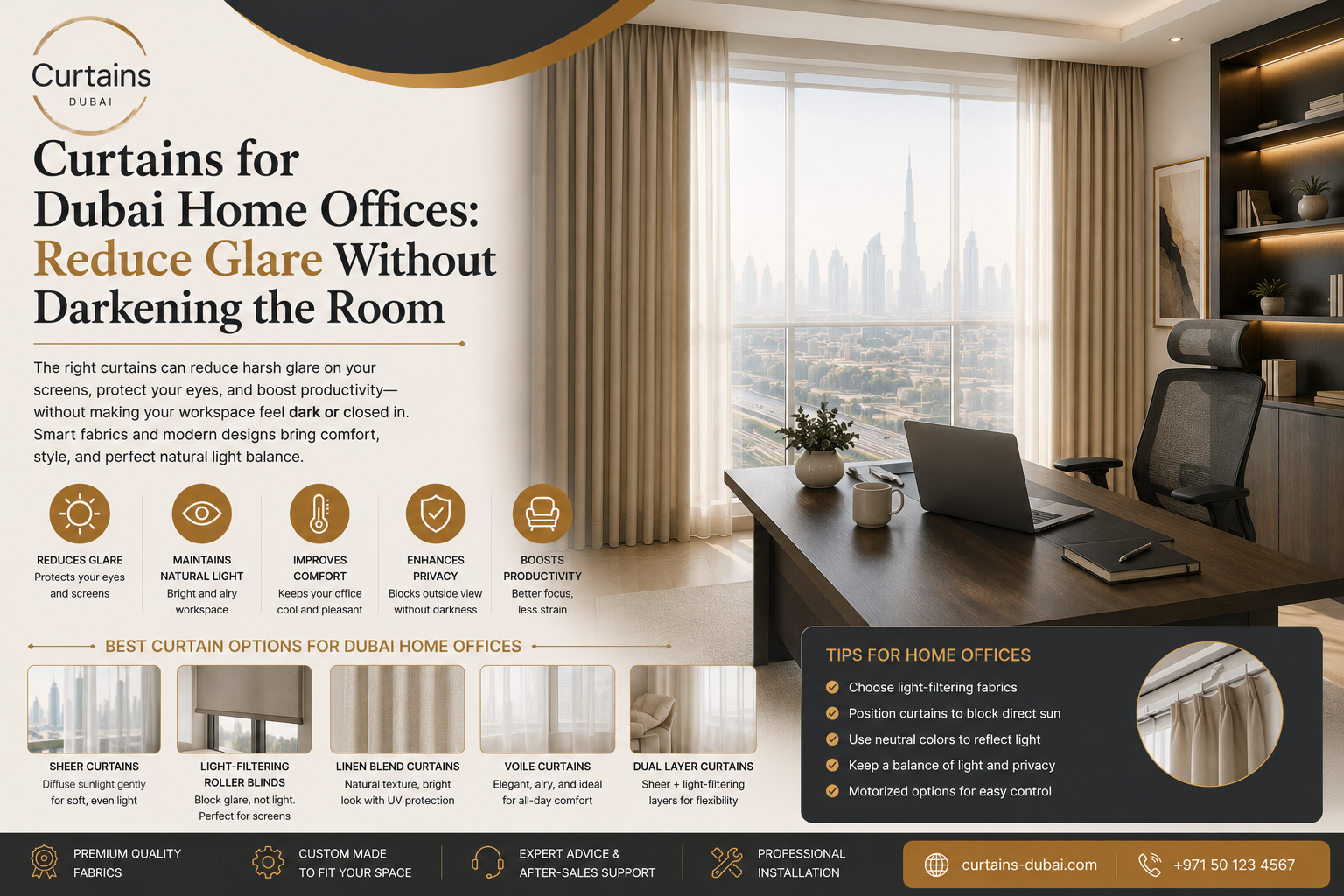
In Dubai’s fast-paced, design-conscious lifestyle, home offices have become an essential part of modern living. With abundant natural light streaming through large windows, managing glare without sacrificing brightness is a common challenge for homeowners and remote professionals alike.
Curtains designed specifically for Dubai home offices offer a smart solution—balancing light control, visual comfort, and aesthetic appeal. Unlike heavy blackout options that can make a space feel closed off, these modern curtain styles help soften harsh sunlight, reduce screen glare, and maintain a bright, productive atmosphere.
Whether you’re working long hours on a computer or attending virtual meetings, the right curtains can significantly improve focus and reduce eye strain while complementing contemporary interior designs.
How to Position Curtains to Eliminate Screen Glare at Peak Hours
Screen glare in Dubai home offices is mostly caused by direct sunlight entering from side angles during peak hours. The most effective curtain positioning strategy is not just closing them, but controlling angle and overlap.
Curtains should extend beyond the window frame on both sides so they fully block lateral light leaks. Floor-to-ceiling installation also helps eliminate top-down glare, which is common in apartments with high windows. In work setups, the desk should ideally be placed perpendicular—not facing or backing directly into—sun-facing windows.
This reduces reflection on screens while still allowing ambient daylight. Layering sheer and blackout curtains gives additional flexibility, allowing filtered light during the day and full blockage during peak sun hours without completely darkening the room.

Why Top-Down Bottom-Up Shades Work Better Than Full Curtains
Top-down bottom-up shades offer a level of light control that traditional full-length curtains cannot match. Instead of opening or closing the entire window covering, they allow selective exposure from either the top or bottom, which is especially useful in work environments.
In Dubai home offices, this means you can block direct glare at eye level while still allowing daylight from above to illuminate the space. This balance reduces eye strain and maintains a natural lighting environment for productivity.
Full curtains, while effective for complete blackout, are less flexible during working hours. Top-down systems also maintain privacy without sacrificing natural light, making them ideal for lower floors or densely built areas. Their precision control is why they are increasingly used in modern workspace design.
The Best Sheer Density for Video Call Backgrounds in Dubai
Sheer curtain density plays a key role in how professional a background appears during video calls. In Dubai, where strong daylight can easily overexpose rooms, medium-density sheers are typically the best choice.
Very light sheers may appear too transparent, revealing clutter or strong backlighting, while overly dense sheers can make the background look heavy or dull. Medium weaves diffuse sunlight evenly, creating a soft, neutral backdrop that looks clean on camera.
This helps reduce contrast between the subject and background, preventing harsh shadows or washed-out visuals. Designers often recommend neutral tones like off-white, soft beige, or light greige, as these colors balance warmth and clarity on video platforms. Proper sheer selection can significantly improve the perceived professionalism of home-based workspaces.
How Light-Filtering Roller Blinds Compare to Curtains for Work Zones
Light-filtering roller blinds and curtains both manage daylight, but they behave differently in work environments. Roller blinds provide precise, flat control over incoming light, making them ideal for reducing glare on screens. However, they can sometimes create a more rigid lighting effect.
Curtains, especially layered systems, diffuse light more softly, producing a more natural and comfortable ambience. In Dubai home offices, where sunlight intensity changes throughout the day, curtains offer greater adaptability when combined with sheers.
Roller blinds are more minimal and space-efficient, while curtains contribute to acoustic softness and aesthetic warmth. For work zones, the choice often depends on whether visual precision (blinds) or atmospheric comfort (curtains) is prioritized. Many modern setups actually combine both for optimal performance.
Why White Curtains Create Less Eye Strain Than Dark Fabrics
White curtains reduce eye strain primarily because they reflect rather than absorb light, creating a more balanced luminance environment. In bright climates like Dubai, dark fabrics tend to absorb sunlight and create strong contrast between bright windows and darker interior surfaces.
This contrast forces the eyes to constantly adjust, which can lead to fatigue during long working hours. White and light-colored curtains diffuse incoming light more evenly, reducing harsh shadows and stabilizing brightness levels across the room.
This makes screen viewing more comfortable, especially in home offices or study areas. Additionally, white curtains help maintain a softer visual field, which is easier for the human eye to process over extended periods. The result is a calmer, more consistent lighting environment that supports focus and reduces visual fatigue.
How Motorized Curtains Adjust Automatically as Sun Moves
Motorized curtains can be integrated with smart home systems that respond to real-time sunlight conditions using sensors or programmed schedules. In Dubai, where sun angles change dramatically throughout the day, these systems can automatically adjust curtain positions to minimize glare and heat gain.
For example, curtains may partially close during peak afternoon sun and reopen later to maximize natural light. Advanced systems use light sensors or weather data to make continuous adjustments without manual input.
This not only improves comfort but also reduces energy consumption by lowering reliance on air conditioning and artificial lighting. In home offices, automation ensures consistent visual conditions for screen work without constant manual intervention. Over time, this dynamic response creates a more efficient and comfortable indoor environment.
The Best Curtain Fabrics That Don’t Create Audio Echo on Calls
In video call environments, fabric choice can influence room acoustics more than many people expect. Hard surfaces reflect sound waves, creating echo and reducing clarity during calls. Dense, soft curtain fabrics help absorb these reflections, improving audio quality. In Dubai apartments with tiled floors and glass-heavy designs, this becomes especially important.
Heavy polyester blends, velvet, and lined curtains are among the most effective materials for reducing echo because they dampen sound vibrations. Even layered sheers combined with blackout curtains can improve acoustic performance by breaking up sound reflection paths.
Lightweight or overly smooth fabrics are less effective because they do not absorb enough sound energy. Proper curtain selection can significantly enhance call clarity without requiring additional acoustic treatment in the room.
How to Layer Curtains for Variable Light Control Throughout the Day
Layering curtains is one of the most effective strategies for managing Dubai’s intense and variable sunlight. A typical system combines sheer curtains for daytime diffusion and blackout curtains for full light control when needed. During morning hours, sheers allow soft natural light that supports productivity without glare.
As sunlight intensifies, sheers can be supplemented with partially drawn blackout layers to reduce brightness while maintaining some ambient light. In the evening or during presentations, full blackout coverage provides complete control.
This layered approach allows users to adapt lighting conditions throughout the day without changing window treatments. It also enhances thermal comfort by reducing heat gain during peak sun hours. Proper layering transforms curtains from a static feature into a flexible environmental control system.
What Curtain Colors Improve Focus and Productivity in Dubai Home Offices
Color psychology plays a subtle but important role in productivity-focused environments. In Dubai home offices, neutral tones such as soft greige, light taupe, warm white, and muted sand are commonly used because they reduce visual distraction while maintaining a calm atmosphere. These colors support sustained focus by avoiding high contrast or overly stimulating hues.
Cool tones like soft blue or muted green can also enhance concentration by promoting a sense of calm and mental clarity. Overly dark or saturated colors tend to feel heavy and can reduce perceived space, especially in smaller apartments.
Designers often choose colors that complement natural light conditions, ensuring that the workspace remains visually balanced throughout the day. The goal is to create an environment that supports attention and reduces cognitive fatigue without overwhelming the senses.

Frequently Asked Questions
What is the best curtain solution for a Dubai home office with south-facing windows?
Layered system: sheer for diffuse light + motorized roller shade for glare control. Avoid full blackout during work hours.
What factors should I consider when selecting curtains for my home?
When selecting home curtains, consider the room’s purpose, window dimensions, privacy requirements, and desired light control. Fabric type, color, length, and texture should complement the existing interior. Bedrooms may benefit from light-blocking materials, while living areas can use lighter fabrics to maintain a bright atmosphere. Proper measurements and installation also help achieve a neat, finished appearance.
What are the best curtain options for luxury villas in Dubai?
Choosing villa curtains dubai depends on your villa’s interior style, window dimensions, privacy requirements, and preferred light control. Floor-to-ceiling curtains can create an elegant appearance, while blackout fabrics are suitable for bedrooms and spaces requiring greater privacy. Consider fabric quality, color, and professional installation for a polished result.
Do curtains affect video call quality on Zoom in Dubai?
Yes. Bright curtains behind you cause backlighting issues. Medium-tone or patterned curtains add depth without exposure problems.
How do I prevent afternoon glare on my monitor without darkening the room?
Use top-down shades that lower from the top, blocking sky glare while leaving lower window clear for outside view.
Can I use blackout curtains in a home office during Dubai summer?
Yes, but install dimmable overhead lights to compensate. Working in complete darkness strains eyes.
What’s the best curtain fabric for reducing outside noise in a Business Bay office?
Heavy velvet or multi-layer curtains with acoustic interlining. Standard sheers offer minimal sound reduction.
How often should home office curtains be cleaned in Dubai?
Every few months. Office curtains accumulate dust faster than living areas due to electronics static charge.
Do white or beige curtains work better for professional Zoom backgrounds?
Beige or oatmeal. Pure white blows out exposure and makes you look darker on camera.
Can smart curtains improve my work-from-home routine in Dubai?
Yes. Schedule curtains to open gradually before wake-up time and adjust automatically as sun moves across your workspace.
What curtain style looks most professional in a Dubai home office?
Tailored flat panel Roman shades or wave fold curtains. Avoid ruffles, tassels, or excessive draping in work spaces.